Turning spins the workpiece against a single-point tool, which makes it the natural process for anything round: shafts, spacers, bushings, adapters and threaded fittings. Tolerances on diameter and concentricity are where turning earns its keep, because those are the dimensions a round part is judged on when it is assembled.
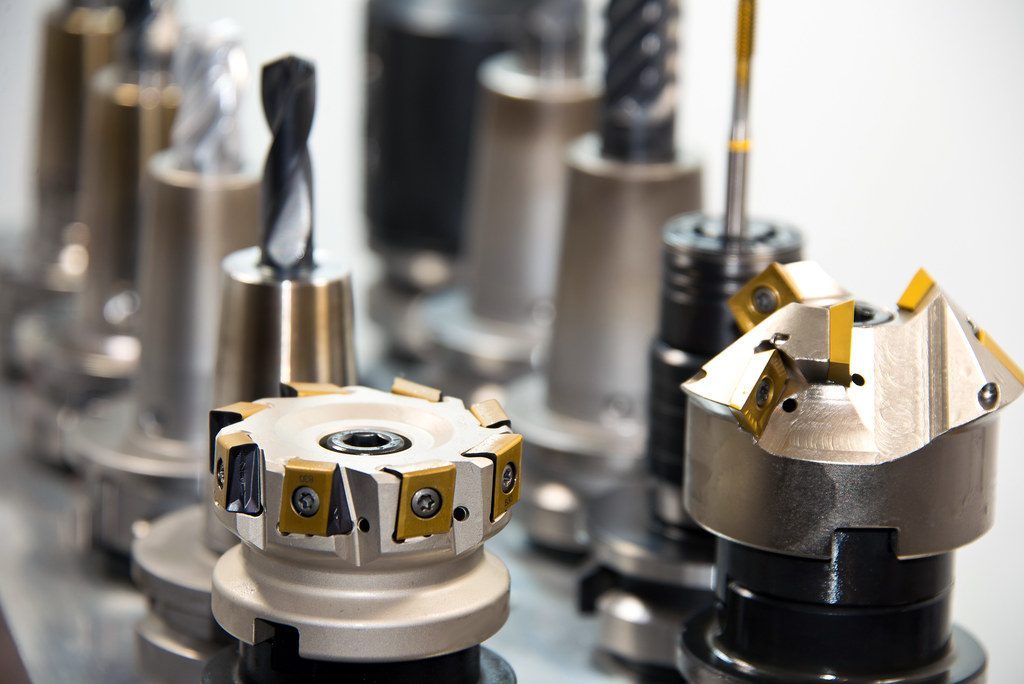
Turning, turn-mill and Swiss-type
A conventional lathe with live tooling can mill flats and cross-drill without a second machine, which is why turn-mill centres suit parts that are mostly round but need a few milled features.
Swiss-type machines feed bar stock through a guide bushing and machine close to the support, which is what makes them the standard choice for long, slender parts where a conventional lathe would deflect the workpiece away from the tool.
Where the tolerances really matter
On a turned part, the tight dimensions are usually diameter and concentricity, and sometimes surface finish on a sealing or bearing surface. Total length and non-critical diameters rarely need to be tight, and loosening those cuts cost.
Concentricity is worth calling out separately: two diameters can each be perfectly on size and still be too far apart in axis, and that is what causes vibration in a rotating assembly. If a part rotates in service, state the concentricity requirement explicitly.
Threads, grooves and cross-features
Internal and external threads, grooves, keyways and cross-holes are all routine. Specifying threads to a recognised standard - metric or unified - rather than a drawing-only definition avoids ambiguity and scrapped parts.
Thread depth and runout matter as much as thread form: a thread that is dimensionally correct but not perpendicular to the seating face will leak or seize. Where a thread seals or centres a part, define the datum face it is measured from.
Bar-fed or billet, and why the choice shows up in the price
Bar-fed work is fast and repeatable because the machine never stops to load a new billet, but the bar must be available in the right diameter and material. For short runs in unusual material, cutting from plate or billet is often cheaper than buying a full bar length.
The length-to-diameter ratio is the other cost driver. Long slender parts need support, low feed rates and sometimes a steady rest, which is why a 200 mm long, 8 mm diameter shaft costs far more per part than its size suggests.
| Feature | Typical capability | Notes |
|---|---|---|
| Diameter range | ~1 mm to ~300 mm | below ~20 mm suits bar-fed work |
| Length-to-diameter | up to ~10:1 with support | Swiss-type for slender parts |
| Threads | metric and unified, internal / external | single-point or thread-milled |
| Surface finish | down to fine turned finishes | state only where functional |
Part families that run well on a lathe
- Shafts, spindles, pins and stepped axles
- Bushings, sleeves, spacers and collars
- Hydraulic and pneumatic fittings, adapters and connectors
- Threaded studs, inserts and fasteners
- Sensor housings, valve bodies and instrument parts
What most often goes wrong on a turned part
Two diameters can each be on size and still be misaligned. If the part rotates, the axis relationship between diameters has to be specified.
A thread defined only on the drawing cannot be gauged. Specifying to a metric or unified standard makes the part verifiable and replaceable.
Length is cheap to hold on a short part and expensive on a slender one, because the part has to be supported and measured twice.
Questions we get asked about cnc turning
What length-to-diameter ratio can you turn?
Up to roughly 10:1 with proper support such as a steady rest or guide bushing, and beyond that the part usually needs special fixturing or a different process. Slender work is quoted individually because deflection, not machine capability, sets the limit.
Do you machine from bar or from billet?
Both. Bar-fed suits higher quantities and standard diameters; billets suit short runs, large diameters and unusual materials where buying a full bar length would be wasteful. The quote will state which route was assumed.
Can you add milled features to a turned part?
Yes. Live tooling allows flats, cross-holes, slots and milled keyways in the same setup, which avoids losing concentricity to a second operation on a mill.
How is a turned thread inspected?
With go / no-go gauges for the thread form, and with optical or contact measurement for the datum face the thread sits on. Both matter - a correct thread on a skewed face still fails in service.
- Bar-fed or billet, matched to quantity
- Live tooling to avoid a second op
- Thread and gauge inspection
- Material certificates on request
Quote a turned part
Send the model and the critical diameters. We will confirm what the process can hold before the job is scheduled.