Sheet metal work converts flat stock into enclosures, brackets, chassis and panels. The process is fast and economical at volume, and the design rules are different from machined parts - bend radii, reliefs and hole placement decide whether a part forms cleanly. Most sheet metal problems are visible in the flat pattern long before the first cut.
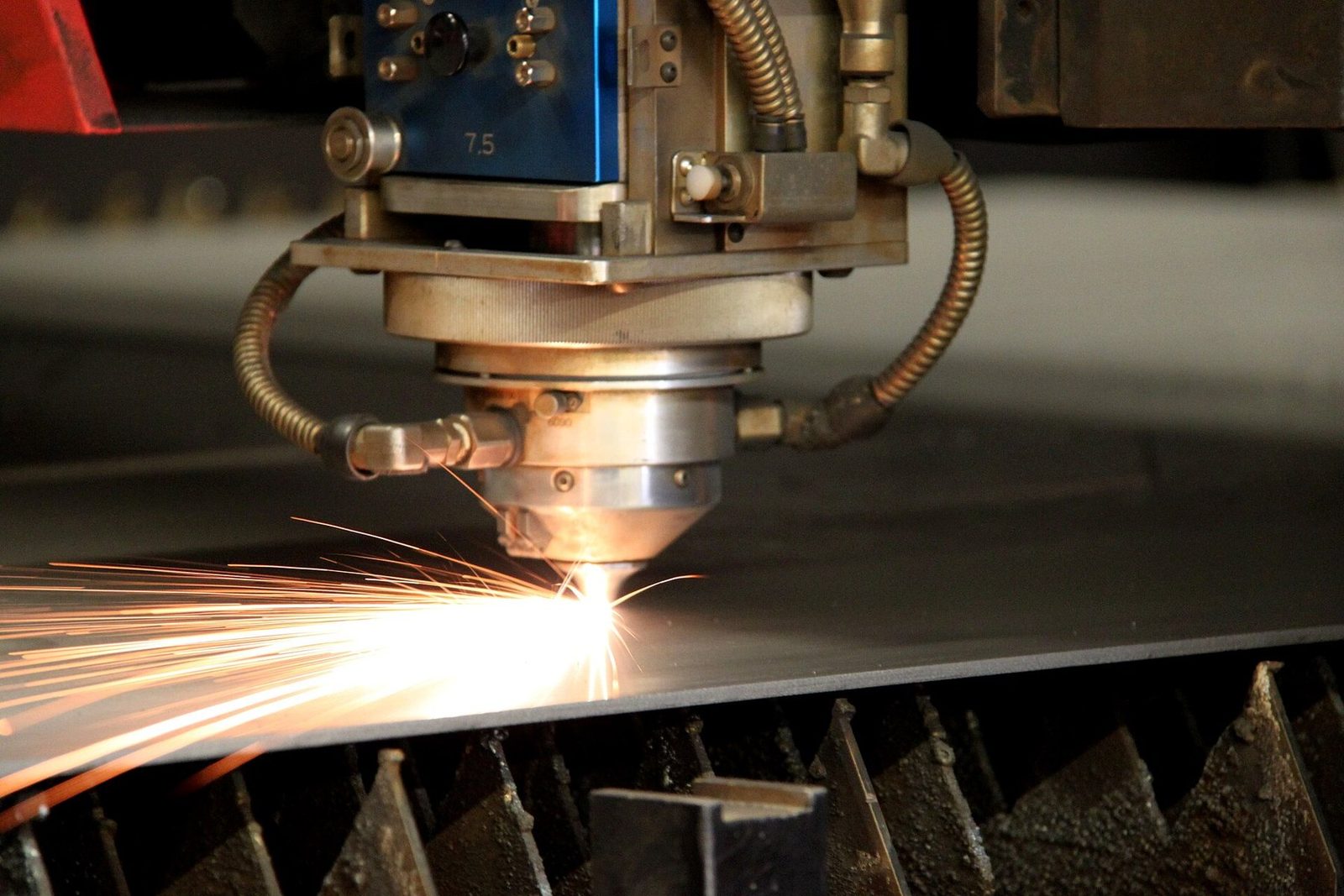
Cutting: laser, plasma and waterjet
Fibre laser cutting handles thin and medium-gauge sheet quickly with a fine kerf. Waterjet cuts thicker material and any material without a heat-affected zone, which matters where edge metallurgy is critical.
The choice is usually decided by edge quality and material rather than speed. A laser leaves a small heat-affected zone and a slightly tapered cut edge; waterjet leaves a clean edge on almost anything, including pre-hardened plate and non-metals, but is slower and more expensive per metre of cut.
Forming and the rules that matter
Bending needs a minimum inside radius related to thickness, and a bend relief at the end of a bend line to stop tearing. Holes placed too close to a bend distort. Hole diameters should generally be at least the material thickness for clean punching.
The flat pattern is where these decisions are validated. If the unfolded part cannot be nested without a hole crossing a bend line, the design needs changing before tooling - not after the first batch is scrapped.
Joining and finishing
Spot welding, MIG/TIG welding, riveting and clinching all have places, and press-in hardware (standoffs, nutserts) is added after forming. Sheet-metal assemblies are often finished with powder coating or plating.
Joining method affects distortion more than it affects strength in most enclosures. Welding pulls the assembly; riveting and clinching do not. Where a frame must stay square, mechanical fastening is often the more predictable route.
Tolerances in sheet metal are not the same as in machining
A sheet metal part is a folded accumulation of tolerances: cut accuracy, bend position, bend angle and material spring-back all stack up. Realistic general tolerances for formed dimensions are measured in tenths of a millimetre, not hundredths.
Holding a machined-level tolerance on a formed feature usually means adding a machining operation after forming, which changes the part's cost class. If a hole must be precise, drill or ream it after bending rather than expecting the punch to place it perfectly.
| Process | Best for | Planning note |
|---|---|---|
| Fibre laser | thin to medium sheet, fast | fine kerf, heat-affected edge |
| Waterjet | thick or heat-sensitive material | no heat-affected zone |
| CNC bending | consistent angles at volume | min radius ~ material thickness |
| Welding / riveting | assemblies and frames | distortion control matters |
Part families that suit sheet metal
- Enclosures, chassis and rack panels
- Mounting brackets, braces and support plates
- Machine guards, covers and access panels
- Frames and welded sub-assemblies
- Screens, grilles and perforated panels
What most often goes wrong in sheet metal design
A hole inside the bend deformation zone pulls oval. Keep holes at least a material thickness plus bend radius away, or move them after forming.
Without a relief at the end of a bend line, the material tears. It costs nothing to design in and is expensive to discover in production.
Formed dimensions accumulate cut, bend and spring-back error. Tight tolerances on formed features usually require a post-forming machining operation.
Questions we get asked about sheet metal
What is the minimum inside bend radius?
A practical rule is one material thickness for mild steel, with more for harder or thicker material and for aluminium grades prone to cracking. Going below it risks cracking on the outside of the bend, and the safe figure is confirmed per material rather than assumed.
Does laser cutting leave a heat-affected zone?
Yes, a narrow one. On most parts it is irrelevant, but where the cut edge is a fatigue surface or will be welded and inspected, the oxide layer may need removing. Waterjet avoids the issue entirely.
When should press-in hardware be installed?
After forming, never before, because bending a plate with hardware already fitted distorts the holes and can loosen the inserts. If a hardware position sits near a bend, expect the position tolerance to loosen.
Can you work from a 3D model rather than a drawing?
A model plus a drawing is the ideal package. For sheet metal a model alone is often enough because the flat pattern can be derived, but the drawing should state material, thickness, finish and any dimension that is genuinely critical.
- Flat-pattern review before cutting
- Bend reliefs built into the design
- Press-in hardware after forming
- Powder coat or plating to spec
Quote a sheet metal part
Send the model or drawing with material, thickness and quantity. We will review the flat pattern before anything is cut.