The economics pull in opposite directions
Machining has low setup and high per-part cost. Injection moulding has high setup (a steel mould) and very low per-part cost. That means there is a volume - different for every part - where the two lines cross and the cheaper route flips.
The crossover is rarely at a round number. It depends on part size, wall thickness, how many cavities the tool carries, and how much finishing the moulded part needs to meet the same specification. Treating it as a fixed quantity is how projects end up paying for a mould they do not need.
Geometry decides as much as volume
Moulding needs draft so the part can eject, uniform wall sections to avoid sink and warpage, and a mould that can be parted. If a part has undercuts, thick sections or tight features, the tooling becomes complex and expensive.
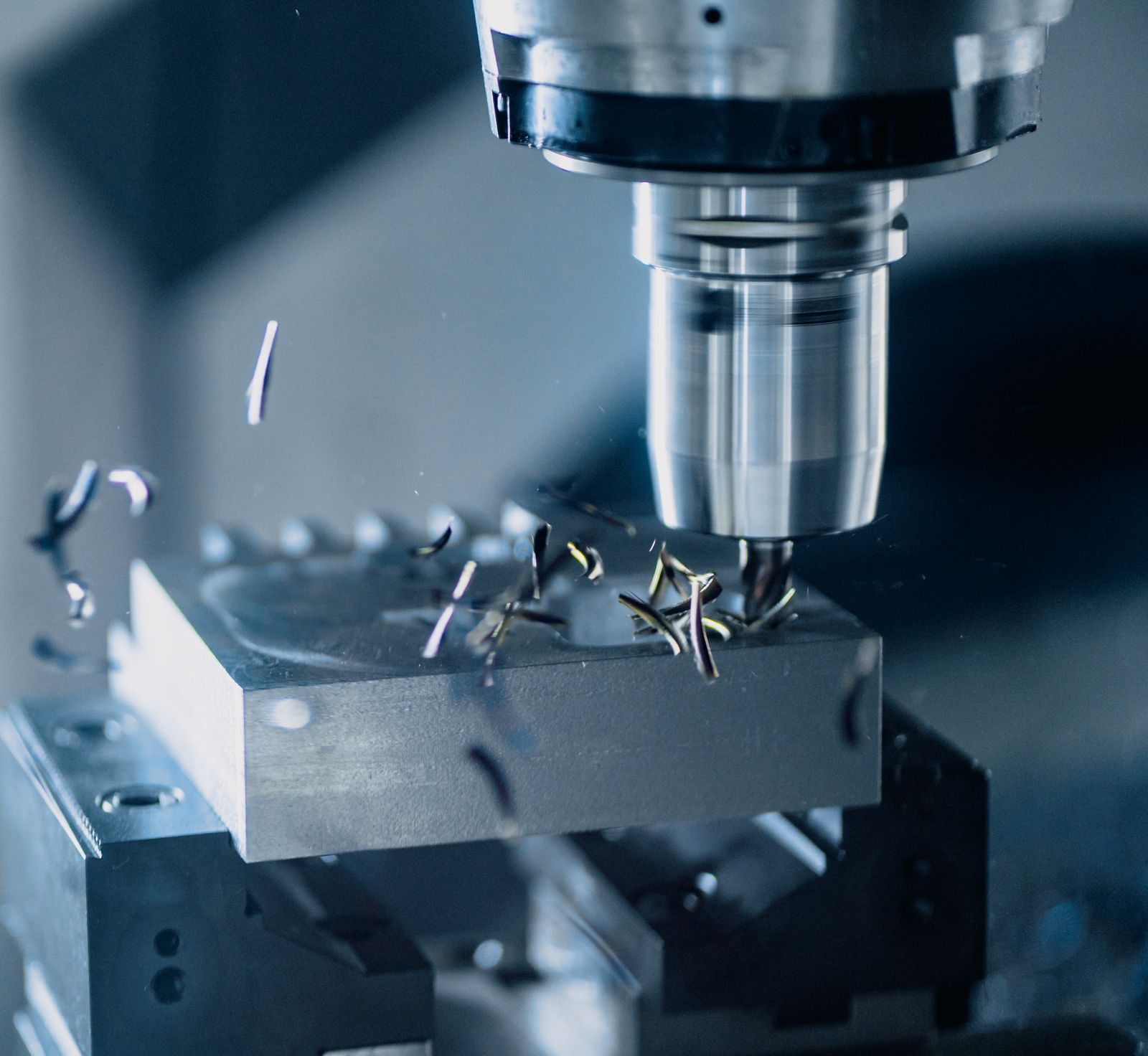
Machining has no draft requirement and handles undercuts natively. A design that is awkward to mould is often trivially easy to machine, which is why a part can be cheaper to machine at a volume where the arithmetic would normally favour moulding.
Prototypes, bridges and production
A common pattern is to machine prototypes and bridge quantities while a mould is being made, which keeps a launch on schedule without committing bridge volumes to an immature tool. Bridge quantities are also how a design gets validated in the field before tooling steel is cut.
Production moulding partners such as MadeInDayin, which builds injection moulds and runs plastic moulding, usually want a production-intent part design and a volume forecast before quoting a tool. Arriving with a machined part that has already passed field trials is a much stronger position than arriving with a concept.
Material behaviour is not equivalent
A machined part is made from a solid billet with known properties; a moulded part is made from a melt whose properties depend on flow direction, cooling rate and gate position. The same polymer can behave differently in the two processes, especially in glass-filled grades where flow orients the fibres.
That matters for anything carrying load or hitting a tolerance. A machined prototype can prove a geometry; it cannot prove the anisotropic behaviour of a moulded part, so a functional test on moulded samples is still advisable before full production.
Tooling is a fixed bet on volume
An injection mould is a capital commitment made before a single production part exists. A simple single-cavity tool for a small part is a modest sum; a multi-cavity tool with side actions, hot runners and a cosmetic finish is a different order of magnitude entirely. That money is only recovered by the per-part saving the tool unlocks.
The consequence is that the tool is a bet on the volume forecast, and it is not a reversible one. A tool built for a forecast that does not arrive is a sunk cost, while a machine shop that took the same job carries no equivalent risk. This asymmetry is the real reason low-confidence volumes should stay on the machine even when the crossover arithmetic favours moulding.
Cavitation and cycle time set the moulded unit price
Once a tool exists, the moulded cost per part is driven by cycle time and the number of cavities. Cycle time is set by wall thickness and the cooling that follows it, because the part has to be rigid enough to eject; doubling wall thickness roughly squares the cooling time. Cavities divide the machine's hourly cost across more parts, at the price of a bigger tool and a larger press.
This is why a part with thick sections is a poor moulding candidate even when the volume is high: the cycle is long, the machine is occupied, and the tool has to cool a heavier shot. Machining the same part from billet has a slow route too, but no tool to amortise and no cooling constraint to design around.
Draft and wall uniformity are a geometry tax
Moulded parts must release, so they need draft on surfaces parallel to the tool's opening direction. They must also avoid thick sections that sink and thin ones that short-shot or warp, which pushes design towards uniform walls. Where a design needs a thick boss next to a thin rib, the tool has to manage the resulting sink and cycle penalty.
Machining carries none of these requirements. Undercuts, sharp internal corners, varying wall sections and non-uniform mass are all just toolpaths. A design that is awkward to mould is frequently trivial to machine, which is why geometry, not volume, is so often the deciding factor at the crossover.
Material behaviour is not identical across the two routes
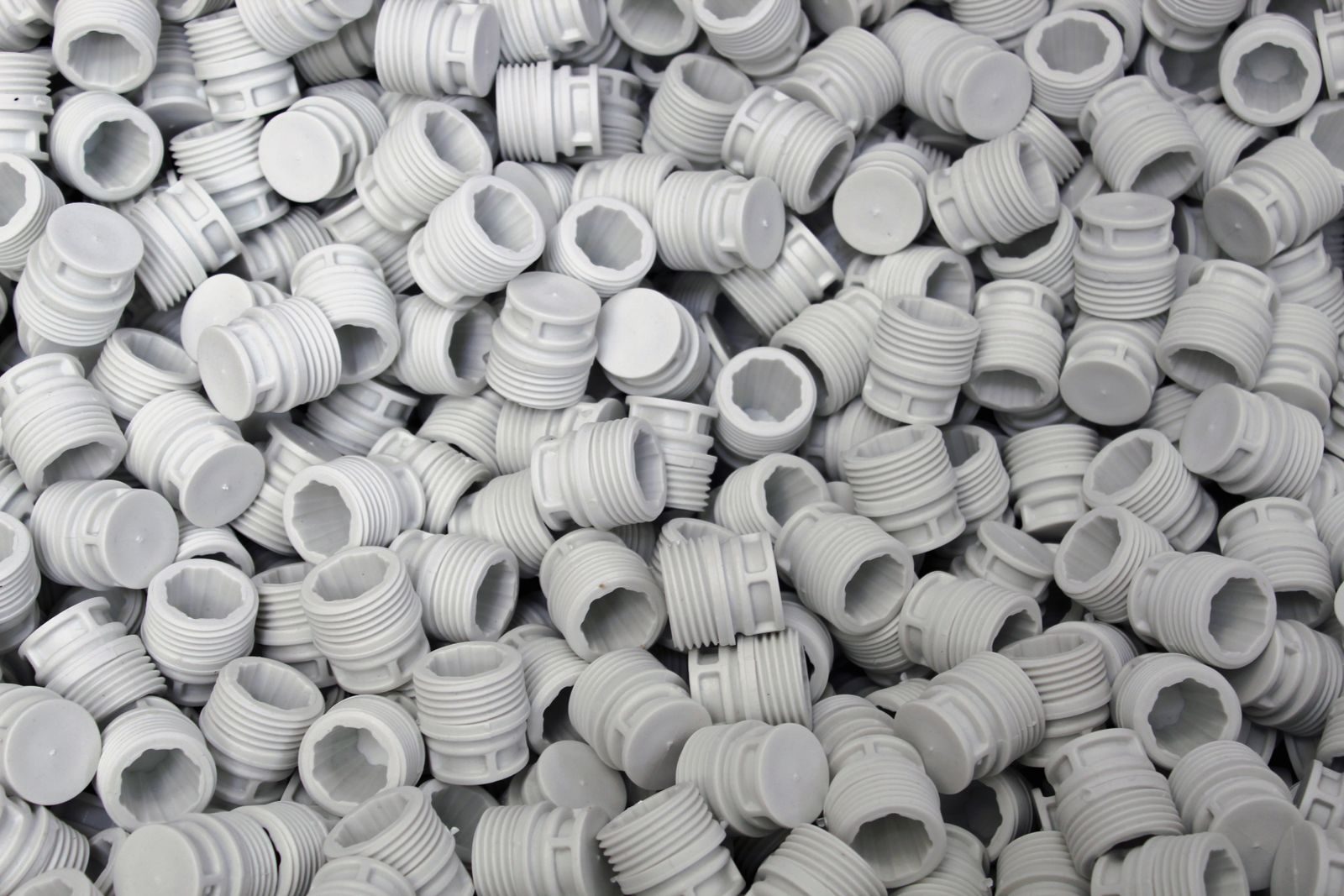
A machined part is cut from solid stock whose properties are known and uniform. A moulded part is formed from a melt whose properties depend on flow direction, cooling rate and gate position, so the same polymer can behave differently depending on how it filled the tool. Glass-filled grades make this visible, because flow orients the fibres and the part becomes stiffer along the flow than across it.
The practical rule is that a machined prototype can prove geometry, fit and function, but it cannot prove anisotropic moulded behaviour. Anything carrying load or holding a tight tolerance through a moulded part still deserves a functional test on moulded samples before full production is committed.
Hybrid routes often beat both extremes
A common compromise is a machined insert or a machined boss overmoulded into a moulded body, which puts the precision where it is needed and keeps the bulk cheap. The same idea appears as machined prototypes while a tool is cut, so that a launch is not held up by tool lead time.
The other hybrid is machining a moulded blank. Where a part needs a fine finish or a tight bore on an otherwise simple moulding, moulding near-net and machining the critical features can beat either process used alone. Designing for that route means leaving machining stock on the moulding and saying so on the drawing.
A decision procedure that uses real numbers
Start with the volume and the confidence in it. Price the part at that volume both ways: machined at the quoted unit price, moulded at the amortised tool cost plus the tooled unit price. Add the cost of a design change - if a change is likely, the moulded route carries a tool modification as well as a design revision.
Then apply the geometry filter. If the part has undercuts, thick sections or a tolerance the moulding process cannot hold, the arithmetic is academic. If it is mouldable and the volume is both high and reliable, the tool is worth the bet. In between, the honest answer is usually to machine now and revisit the tool when the forecast has evidence behind it.
Total cost across the product life
The comparison that matters is not the piece price at one quantity but the total across the life of the product, including tool maintenance, tool life and the cost of scrapping the tool when the design changes. A tool that runs for a decade and a tool that runs for a year carry very different effective costs per part.
Include the cost of change explicitly. Every moulded design change is a tool change with a lead time; every machined change is a program edit. For a product still finding its design, that difference can easily outweigh the per-part saving that justified the tool in the first place.
When machining stays the right answer
Machining wins permanently for low and medium volumes, for high-mix low-volume catalogues, for large parts where the tool would be enormous, and for parts whose geometry the mould cannot easily produce. It also wins wherever a change is likely, because the cost of changing a tool dwarfs the cost of editing a program.
The strategic point is that machining is the flexible route and moulding is the efficient one, and flexibility has value that does not appear on a piece-price comparison. Pricing both routes is still the right first step - but the comparison should include the option value of being able to change your mind.
Handing a machined design to a moulder
A moulder wants a production-intent part model, a volume forecast, a material with a grade, and a definition of the cosmetic surfaces. Arriving with a machined part that has already passed field trials is a strong position, because the geometry is proven and the remaining risk is the process rather than the design.
Before the tool is cut, ask for a mould flow analysis and a tool layout to review. That review is the last cheap moment to change the design, and it is the difference between a tool that produces the part on the first trial and one that produces it after three rounds of modification.
Standards and process references
The moulding constraints referenced above - draft, wall uniformity, shrinkage and flow orientation - are the general discipline described in any account of injection moulding, and the material and testing nomenclature comes from ASTM International. Where a part carries a tolerance or a load, the measurement itself is only as good as its traceability, which is the NIST calibration framework.
Frequently asked
At what volume does moulding become cheaper?
There is no universal number - it depends on part size, tool complexity, cavity count and material. Below a few hundred parts machining nearly always wins; above several thousand moulding usually wins if the geometry is mouldable. The only reliable answer comes from pricing both routes for the specific part.
Can a machined part prove a design before tooling?
It proves geometry, fit and function, which is most of the risk. It does not reproduce moulding-specific behaviour such as flow-induced anisotropy, weld lines or shrinkage, so moulded samples are still needed before committing to full production.
What makes a part expensive to mould?
Undercuts requiring side actions or lifters, thick sections that sink, very tight tolerances, and cosmetic surfaces with a high finish requirement. Each of these adds tooling complexity, which is what raises the upfront cost that has to be amortised over volume.